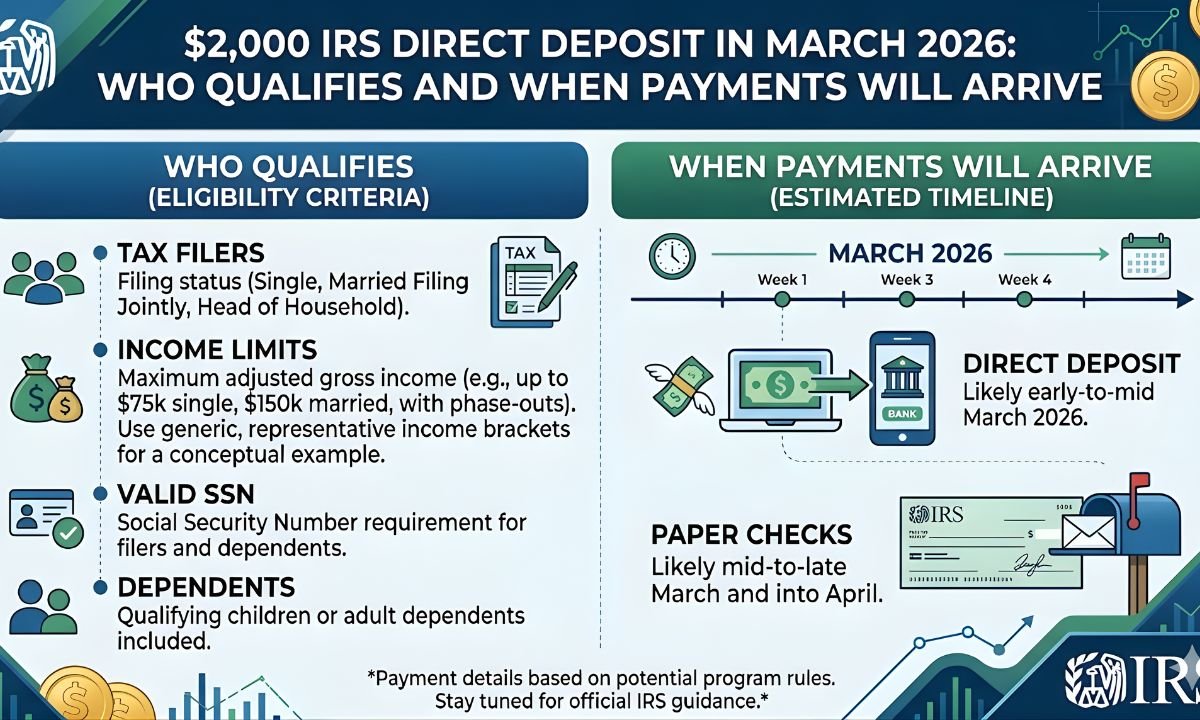
In recent weeks, a wave of online posts and news headlines has created a buzz about a supposed $2,000 payment being sent to Americans by the Internal Revenue Service (IRS) in March 2026. These claims have rapidly spread across social media and various websites, leading many to believe that a new stimulus program is in place. However, these assertions are not based on any current official announcements or government actions. There is no confirmation of a universal $2,000 federal payment being issued to all Americans.
No New Federal Stimulus Program Announced
The United States government has not introduced any new stimulus legislation aimed at providing a $2,000 payment to every citizen. The last time nationwide stimulus checks were distributed was during the COVID-19 pandemic, with the final round issued in 2021. Since then, Congress has not approved any similar initiatives. Without new legislative action, the IRS is unable to issue universal stimulus payments. Consequently, many reports regarding a $2,000 payment are based on misunderstandings or mere speculation.
Why Some People Are Receiving Deposits
During the 2026 tax season, many taxpayers are noticing deposits in their bank accounts. In most cases, these payments are simply regular tax refunds for the 2025 tax year. The amount of a tax refund depends on various factors, including income, the amount of tax withheld during the year, and eligibility for certain tax credits. Because the average refund amount often hovers around $2,000 for some taxpayers, it can lead to confusion and the mistaken belief that a new government payment is being issued.

How Tax Refunds Are Calculated
Tax refunds are not uniform amounts and vary from individual to individual. The final refund depends on the total tax withheld from a person’s paycheck during the year versus how much tax they actually owe. Credits such as the Earned Income Tax Credit and the Child Tax Credit can also increase the size of a refund. As a result, some individuals may receive refunds close to $2,000, while others may receive smaller or larger amounts depending on their specific financial situation.
Typical Refund Processing Timeline
The IRS typically processes most electronic tax returns within about 21 days after they are accepted. Taxpayers who file electronically and opt for direct deposit usually receive their refunds more quickly. Returns that include credits like the Earned Income Tax Credit may take longer because the IRS conducts additional verification checks to prevent fraud. For many people who file returns in late February, refunds may appear in their bank accounts between mid-March and the end of March.
Avoiding Online Scams and Misinformation
Whenever rumors about government payments circulate online, scammers often exploit the situation. Some messages claim to assist people in accessing a $2,000 payment in exchange for personal details or fees. These messages are typically fraudulent. It is important to note that the IRS does not contact taxpayers via unexpected emails, texts, or social media messages requesting personal information.
Also Read:
 IRS Refund Delivery Changes in 2026
Disclaimer: The information provided in this article is based on current data and understanding as of October 2023. Always verify any claims regarding government payments through official sources.