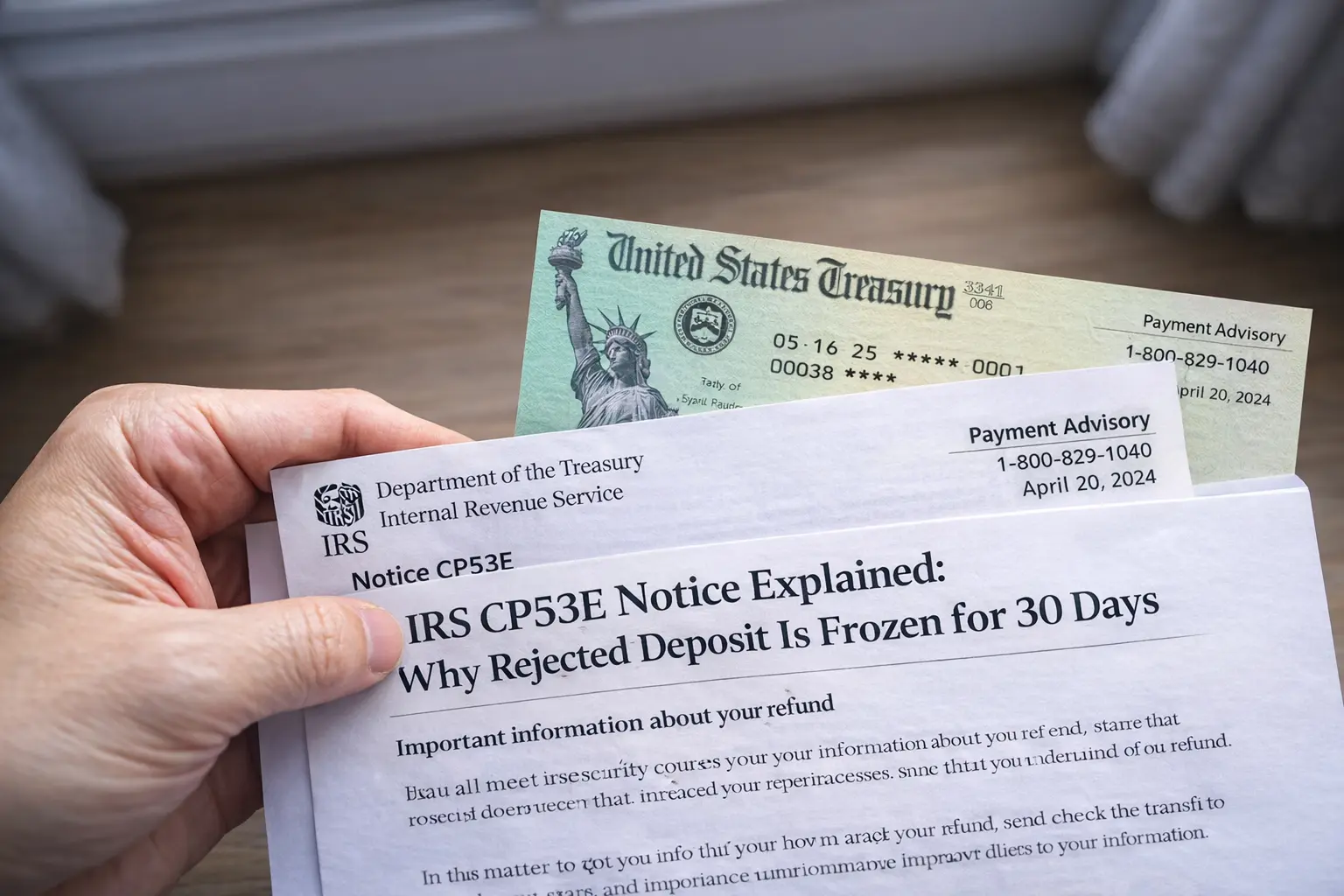
Receiving a CP53E notice from the IRS can be a confusing and stressful experience for taxpayers eagerly awaiting their tax refunds. This notice indicates that your refund has encountered an administrative issue and is currently frozen in the Treasury payment system. The freeze will remain in place until you update your banking details online. This change is part of a broader move by the IRS to transition to fully electronic disbursements, aligning with a federal mandate effective in 2026.
Why You Received a CP53E Notice
The CP53E notice is issued when there is a problem with the direct deposit of your tax refund. Common reasons include a mismatch in bank account information or a rejected transfer due to issues like a typo in the routing number or a closed account. In the past, such issues would result in the IRS automatically sending a paper check. However, the new policy under Executive Order 14247 now requires taxpayers to intervene and update their banking details online.
The 30-Day Freeze Period
Once a CP53E notice is issued, your refund enters a 30-day “temporary freeze.” This freeze is a mandatory correction period that allows you to provide the IRS with the correct banking information. During this time, your refund is held at the Treasury level, meaning it cannot earn interest or be accessed by any agency or creditor. This measure aims to encourage taxpayers to transition to digital payment methods, thereby reducing costs and minimizing the risk of mail theft.

Updating Your Banking Information
To resolve the issue and release your refund, you need to log into your IRS Online Account and update your banking details. Failure to do so within the 30-day window will result in further delays. If the window closes without any action from the taxpayer, the IRS will initiate a manual process to print and mail a paper check. This process can add up to six additional weeks to your wait time for the refund.
The Consequences of Ignoring the CP53E Notice
Ignoring the CP53E notice can lead to significant delays in receiving your tax refund. The system will assume that you do not have access to a digital account, and a “Safety Net” check will not be authorized until the 30-day period has fully expired. This can create financial strain for households that rely on their tax refunds for immediate liquidity.
Conclusion
The CP53E notice represents a critical step in the IRS’s transition to electronic disbursements. While it may seem inconvenient, updating your banking information online is essential for receiving your refund promptly. By understanding the process and acting swiftly, you can minimize delays and ensure that your refund reaches you as soon as possible.

Disclaimer: This article is intended for informational purposes only and does not constitute financial or legal advice. Always consult with a professional for specific guidance related to your situation.